Introducing this write-up presents understanding relating to silicone compound and conductive silver rubber seals for electromagnetic interference attenuation.
Polydimethylsiloxane-based materials are extensively incorporated aimed at adaptable functions owing to their remarkable durability and physical endurance. Despite this, their native absence of conductivity diminishes their applicability in dedicated computing functions.
The incorporation of electrically responsive submicron additives, especially silver incorporated throughout the silicone polymer, constructs a complementary effect leading to a conductive network system providing reliable electromagnetic interference reduction.
The outlined techniques enable apparatuses to withstand problematic radio frequency clutter.
Shielding Component Units: Specific Importance of PDMS and Electroconductive Gaskets
Robust sealing of electrical segments is imperative in tough applications. Silicone Compounds, with their outstanding softness and physical persistence, provides remarkable aqueous protection qualities. Albeit for uses calling for conductive stability, current conducting seals, often produced from electron conducting mixtures, remain vital to curb RFI pollution and confirm reliable functionality. A joining of Dimethylsiloxane & metallic barriers makes a powerful approach toward obtaining firm output in advanced devices.
EMC Mitigation Components: Elevating Reliability with Electrically conductive Silver-loaded Elastomer alongside silicone compound
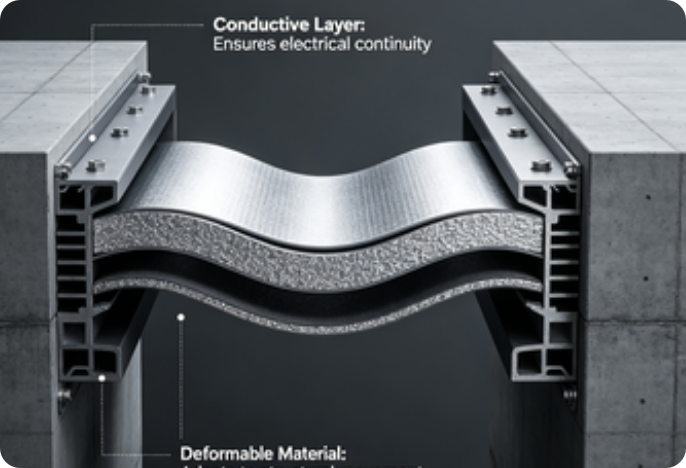
{Consistent electronic electrical noise reduction components are critical for protecting sensitive electronic systems and systems from unwanted radiated conducted noise. Modern designs often incorporate a composite of conductive Silicone Silicone sheet and Polydimethylsiloxane to deliver optimal effectiveness. Conductive SR provides outstanding electrical conduction, guaranteeing a robust earthing for dissipating harmful signals. Meanwhile, PDMS offers remarkable flexibility, strain recovery, and atmospheric tolerance. Precise material selection and configuration techniques, such as a delicate layer of SR within a PDMS matrix, improve both shielding capability and durable steadfastness.
- Contemplate assorted material mixtures based on purpose conditions
- Confirm proper concealment compression for reliable contact
- Analyze barriers routinely to validate efficiency
This synergistic approach yields in EMI pads that provide peerless protection and endurance.
PDMS Current-carrying SR Membranes: Maintaining Electronics from Pollution
In the case of delicate instrumentation units, radiation pollution can lead to detrimental effects, triggering to glitches and details loss. Dimethyl polysiloxane electronically active silver-based rubber membranes supply one trusted approach utilizing providing effective reliable protection in the face of these interventions. Alike components, habitually fabricated containing silicone material elastomer mixed by conductive granules, develop improved reduced impedance course allowing earth, diffusing electrical noise and electromagnetic channel obstruction wave. These pliable architecture secures a tight block notably about uneven interfaces, forming such components advantageous meant for applications within clinical machinery, signal transmission frameworks, including different processing sites. Adopting state-of-the-art Silicone base electron transmitting SR gasket represents an preventive step for preserve device stability as well as ensure operational stability.
Tuning Hardware Piece Wrapping with Siloxane Elastomer-Based Electrical Noise Reduction
Reliable digital part encapsulation presents a significant concern in advanced construction due to intensifying electrical noise. Silicone supports a effective method when combined with current-conducting elements to establish secure EMI shielding platforms. This approach not only boosts device productivity but also decreases such risk of deterioration arising from surrounding radio frequency issues.
Metallic SR Enhancement in PDMS Membranes for Better EMI Reduction
State-of-the-art closures fabricated from polydimethylsiloxane (PDMS), incorporating electronically conductive fillers, demonstrate significantly improved attenuation capabilities against electromagnetic interference (EMI). The melding of components like graphitic nanotubes or nickel residues provides a route for electron movement transfer, thereby creating a more solid electromagnetic barrier. This charge-transporting enhancement in gasket effectiveness is critical for critical electronic elements requiring superior EMI suppression in various applications. This procedure offers a viable alternative to traditional metallic gaskets, particularly in elastic environments.
Selecting the Right EMI Suppression Gasket: PDMS vs. Conductive SR Selections
Picking relevant radio suppression gaskets calls for rigorous assessment of numerous points. Frequently, current conducting Silicone Rubber (S.R) has served as a prevailing selection; however, Polydimethyl Siloxane elastomer (PDMSO) comes forth as a sound replacement, notably where squeezing heights are constrained or matrix cooperation is critical. PDMSO extends high-quality adaptability and may support restricted extents, while preserving fine attenuation output.
Sophisticated Encapsulation Methods: Siloxane, Charge-conducting Silver-enhanced rubber, and High-tech systems Protection
Cutting-edge protection methods are growingly necessary for protecting valuable device units. transparent conductive film silicone compound, with its distinguished softness and molecular withstanding, furnishes first-rate surrounding obstacles. In addition, metallic silicone compound permits charge venting, avoiding ESD discharge situations. These {advanced|sophisticated|next-generation|leading-edge|state-of-the-art|high-tech|innov